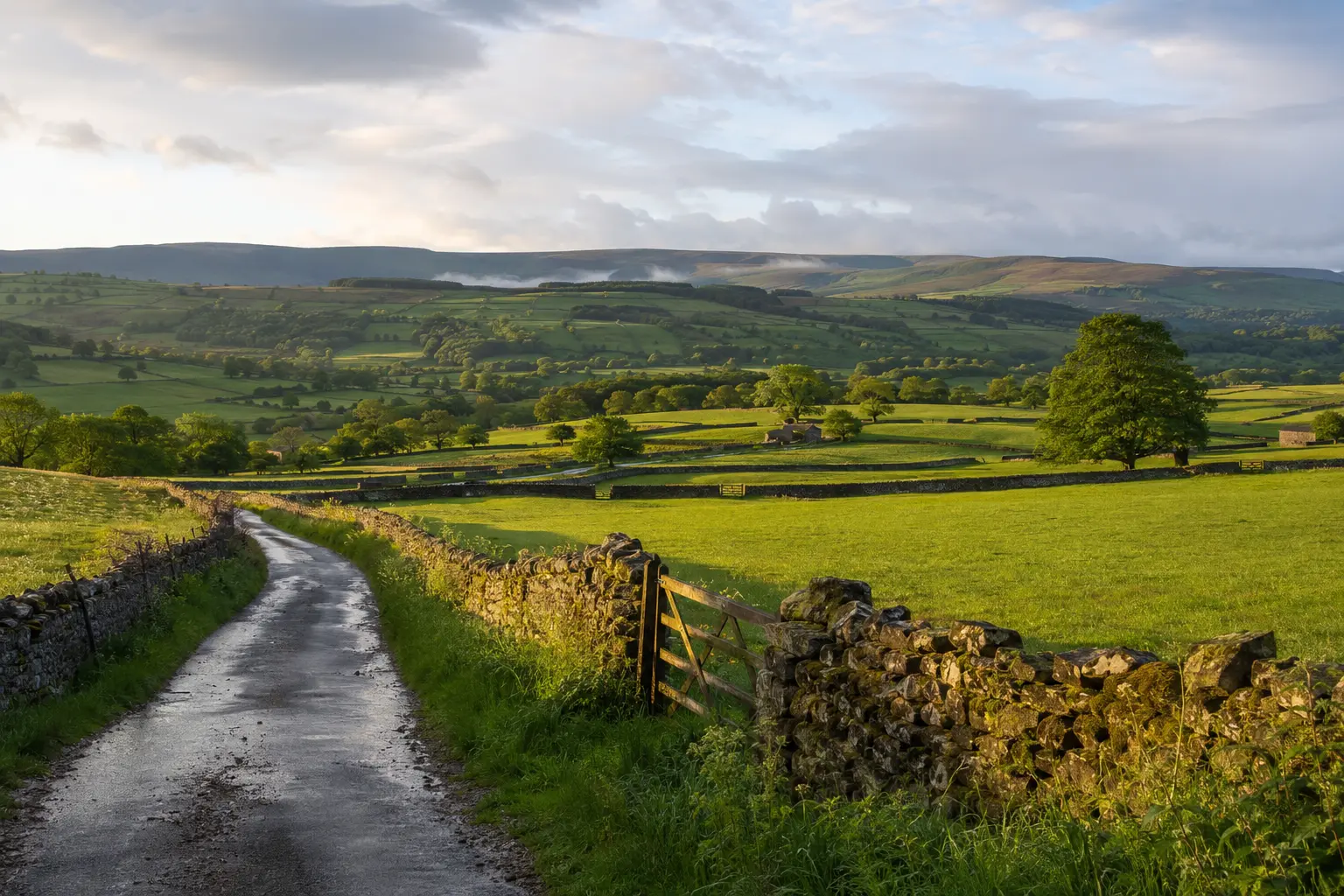
A quiet North Yorkshire lane crossing green fields divided by dry-stone walls

Rural life, month by month

North Yorkshire through the seasons.

From the first woodland flowers to purple moorland, autumn lanes and frost-bright villages, the countryside is never quite the same twice.

A changing landscape

Four seasons, one remarkable county.

North Yorkshire is shaped by working farmland, wooded valleys, market towns, stone villages and great open stretches of moor and dale. The seasons alter its colours and rhythms, but they also change what wildlife needs and how people use the land.

This is not a checklist of attractions. It is an invitation to slow down, notice what is happening in the hedgerows and fields, and enjoy the countryside in a way that respects the people who live and work here.

Fresh green North Yorkshire fields and a country lane in spring
March to May

Spring: the countryside wakes.

Spring begins quietly on sheltered banks and woodland floors. Hedgerows brighten with blackthorn and hawthorn blossom while primroses, lesser celandines and wood anemones appear before the tree canopy closes. Birds become conspicuous again as territories are claimed and nests are built.

On farmland, lambing season and field work make this an especially important time to give livestock space. In gardens and village verges, early flowers provide valuable food for queen bumblebees and other pollinators emerging after winter.

  • Look for blossom, woodland flowers and returning bird song.
  • Keep dogs close around livestock and nesting wildlife.
  • Leave some dandelions and early flowers for pollinators.
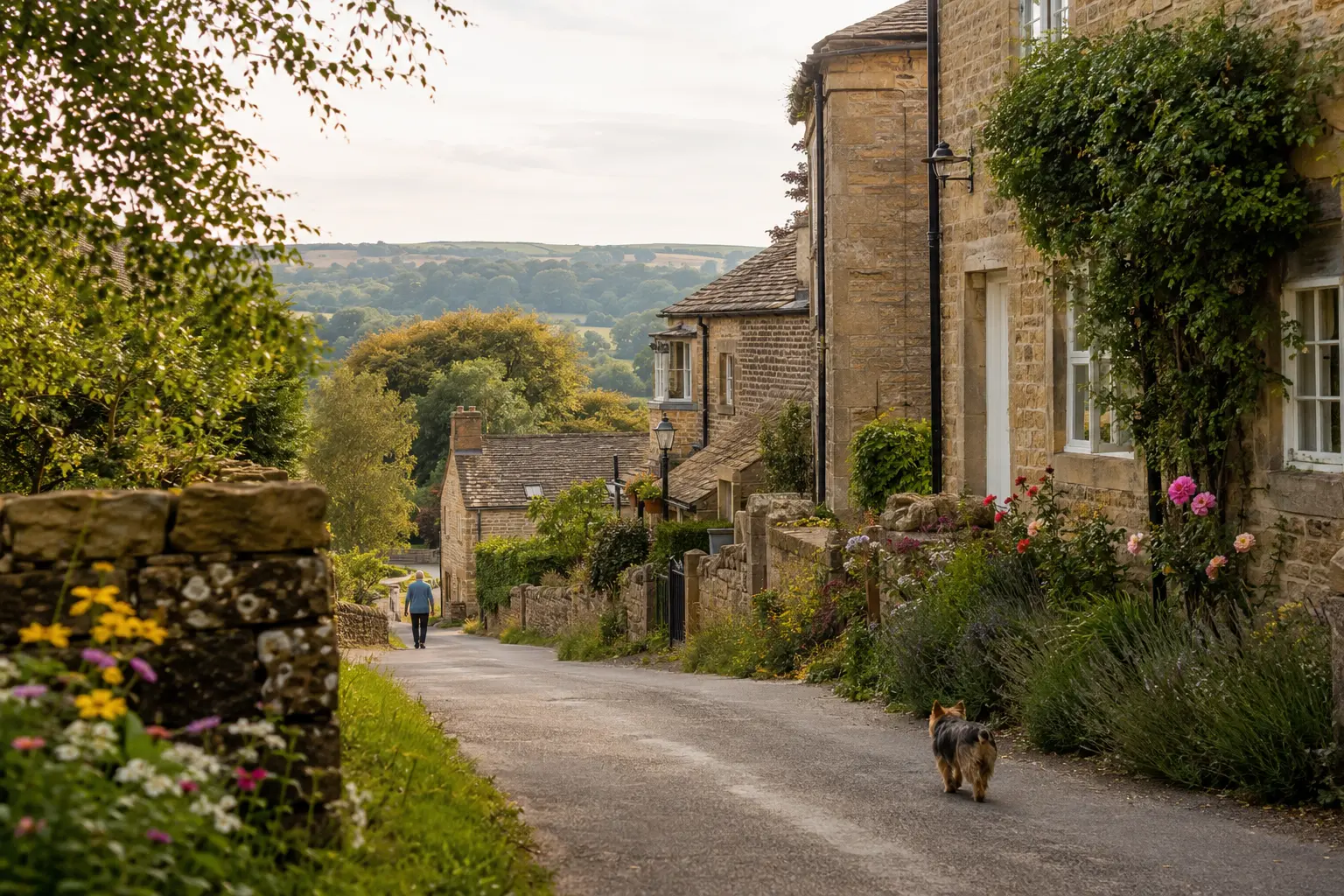
A peaceful North Yorkshire stone village with cottage gardens in summer
June to August

Summer: long days and busy wildlife.

Summer brings the fullest version of the rural landscape. Wildflower verges, hay meadows and cottage gardens carry their greatest variety of flowers, while bees, butterflies and hoverflies make the most of abundant nectar and pollen.

Warm evenings reveal another side of village life. Swifts and swallows feed overhead, bats and other garden wildlife emerge around trees and buildings, and communities settle into the long northern light. Later in summer, flowering heather can turn wide areas of moorland purple.

  • Enjoy wildflower verges without picking or trampling them.
  • Watch pollinators on calm, sunny mornings.
  • Carry water, check conditions and avoid blocking farm access.
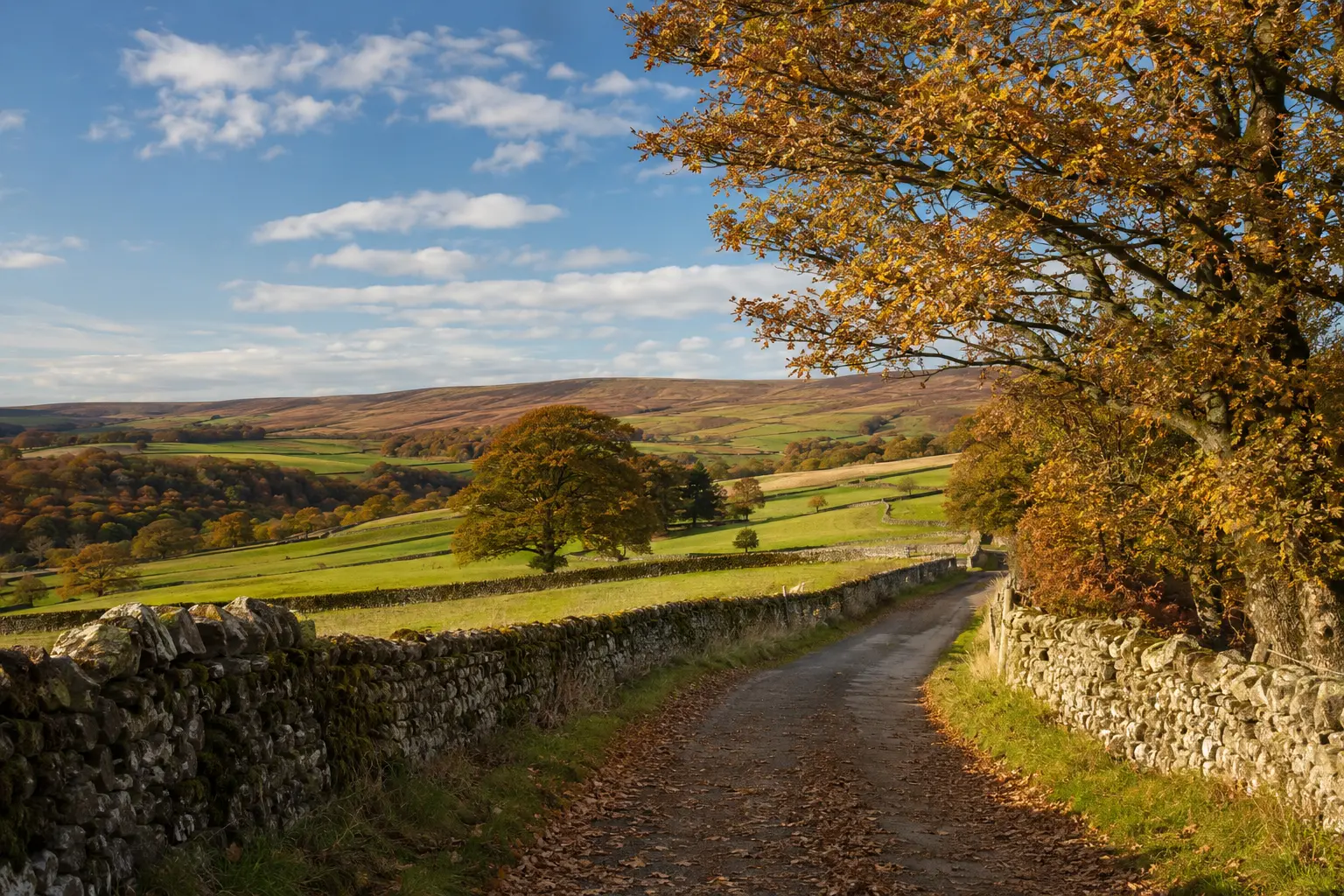
A North Yorkshire country lane between dry-stone walls in autumn sunshine
September to November

Autumn: harvest, hedgerows and colour.

Autumn brings harvest activity, changing woodland and generous colour. Beech, oak and field maple turn warm shades, while hedgerows carry hawthorn berries, rose hips and sloes. These fruits are an important seasonal larder for birds and mammals, so it is worth leaving plenty behind.

In gardens, this is the time to prepare for wildlife rather than clearing everything away: retain seed heads, leaf litter and a few sheltered corners. On walks, paths become wetter and daylight fades earlier.

  • Notice berries and seeds, but forage carefully and legally.
  • Leave fungi undisturbed unless you can identify them confidently.
  • Expect mud, fading light and rapidly changing weather.
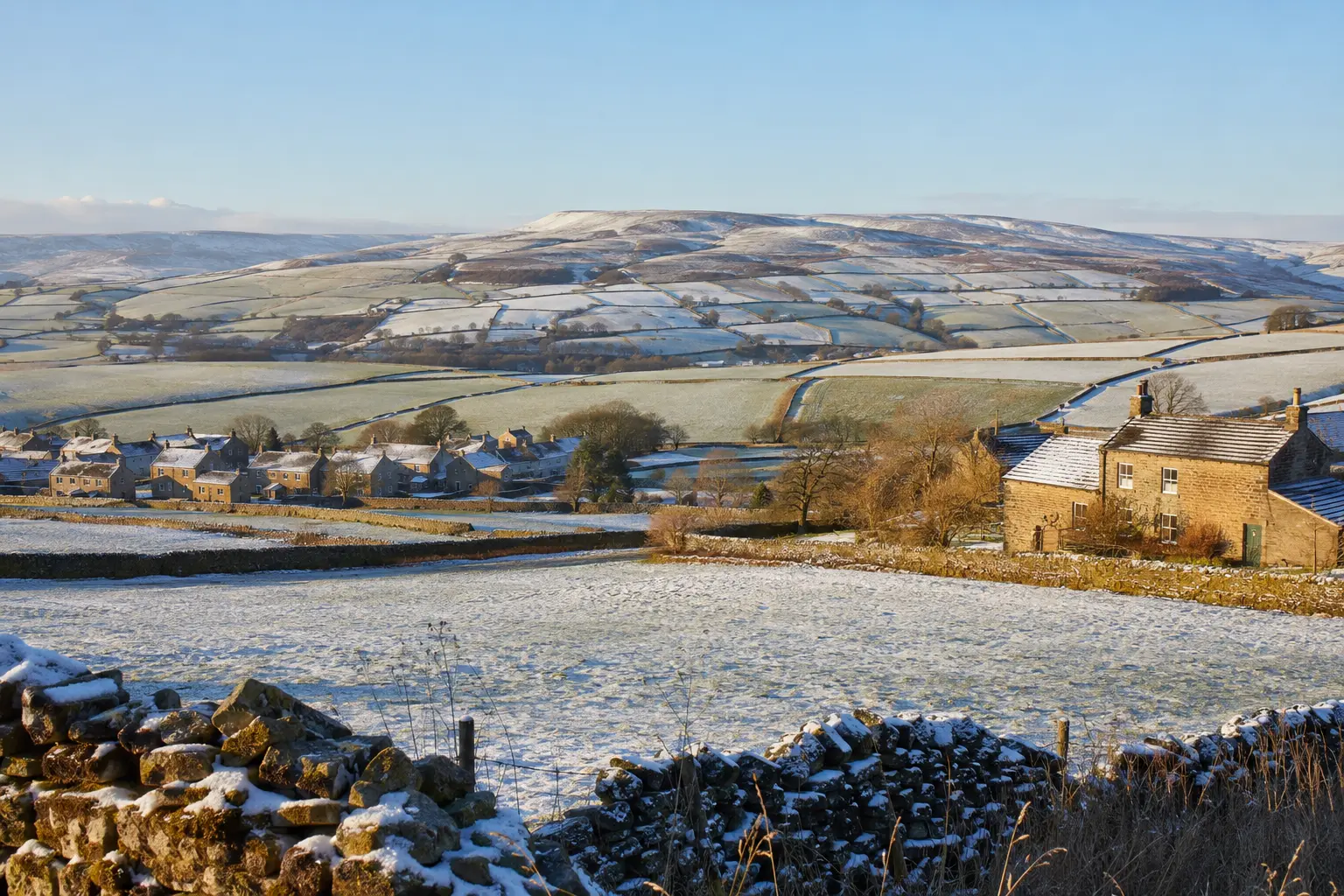
A North Yorkshire stone village and fields under light winter snow and blue sky
December to February

Winter: clear light and quiet beauty.

Winter strips the landscape back to its structure: walls, hedges, bare trees and the folds of the land. Frosty landscapes can make familiar countryside feel entirely new, while clear nights reveal why North Yorkshire’s dark skies are so memorable.

Wildlife has fewer easy meals. Seed heads, leaf litter, ivy and undisturbed garden corners all provide food or shelter. Walks need more preparation too, with short daylight hours, icy surfaces and exposed moorland conditions to consider.

  • Check daylight, weather and local access before setting out.
  • Leave seed heads and sheltered corners in gardens.
  • Enjoy winter views without disturbing roosting wildlife.

Close to home

Simple ways residents can help wildlife.

Gardens, yards and community spaces can form a network of food, water and shelter. A few well-chosen actions, kept up through the year, are more useful than a sudden tidy-up or short-lived project.

Provide safe water

Add a shallow dish or wildlife pond, keep it clean and always include an easy escape route.

Plant across the seasons

Choose a mixture of flowers, shrubs and climbers so nectar, pollen, berries and seeds are available for longer.

Leave winter shelter

Retain some seed heads, leaf litter, hollow stems, log piles and dense cover until warmer weather returns.

Reduce pesticides

Avoid routine chemical use and try wildlife-friendly ways to keep plants healthy and manage pests.

Create nesting places

Protect established shrubs and place suitable bird, bat or insect boxes using current species-specific guidance.

Connect neighbouring gardens

Where safe and practical, small ground-level gaps help hedgehogs travel while dark boundaries support bats and moths.

Respect · Protect · Enjoy

A landscape shared by everyone.

North Yorkshire is beautiful because it is both lived in and worked. Small, considerate choices protect wildlife, livestock, livelihoods and the experience of everyone who follows.

Respect people

Be considerate, leave gates and property as you find them, follow local signs and never block gateways or driveways.

Protect nature

Take litter home, avoid fires, keep dogs under effective control around livestock and do not damage or disturb plants and wildlife.

Enjoy safely

Plan your route, check conditions, wear suitable clothing and understand which paths and access rights apply.

Read the official Countryside Code

Sharing the countryside with pollinators.

Our seven local bee guides explain what to do when a swarm appears, how to identify insects around Malton and simple ways to make gardens more useful for wildlife.

Explore the bee guides