Blossom and nesting cover
Blackthorn can flower early, followed by hawthorn. Fresh growth shelters nesting birds while flowers provide nectar and pollen for emerging insects.
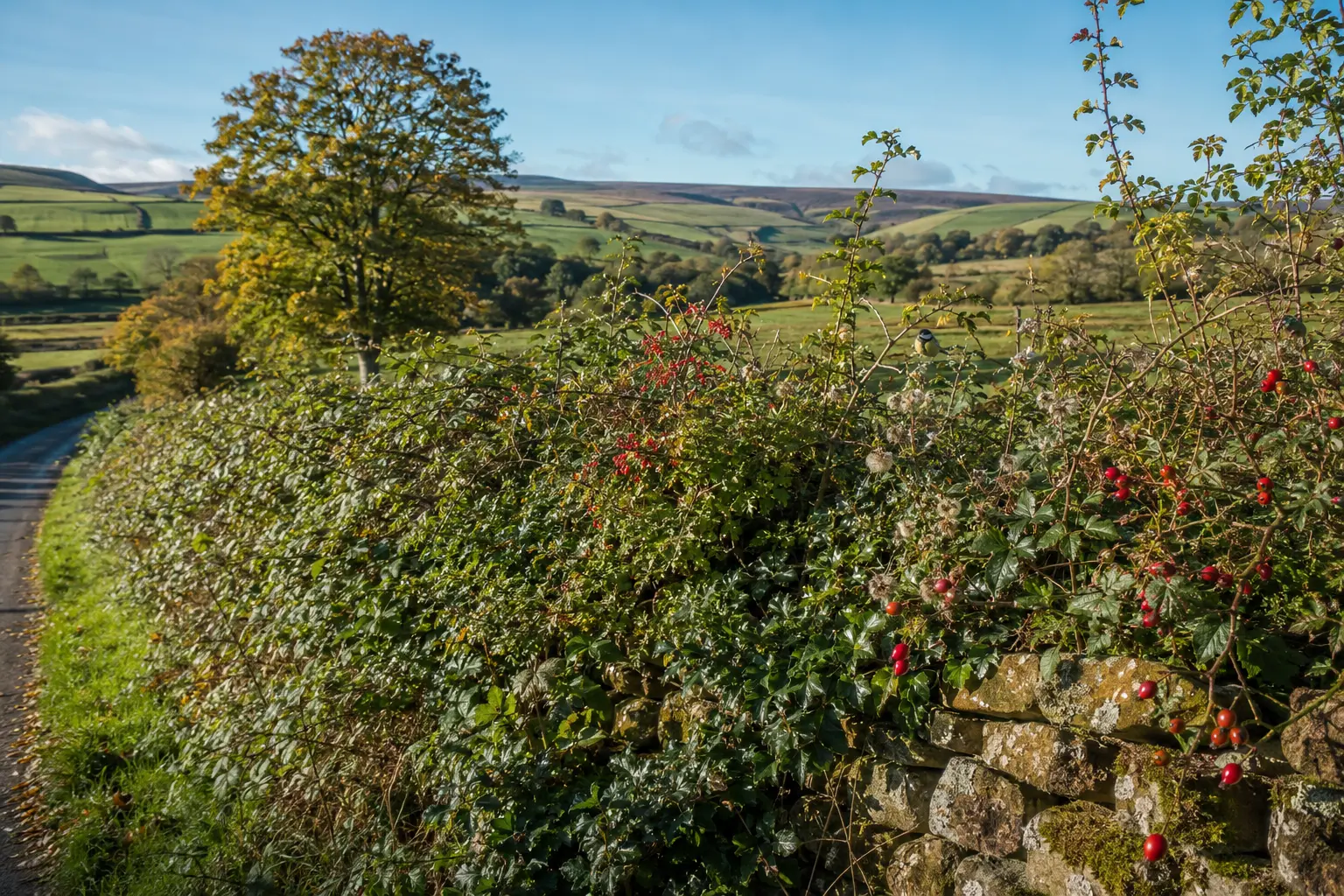
Living boundaries
More than field edges: hedges are shelter, seasonal larders and green routes through a working landscape.
Part of the landscape
Hedgerows divide fields, soften lanes and help define the character of rural North Yorkshire. A well-established hedge can contain shrubs, trees, climbers, banks and grassy margins, each supporting different wildlife.
They also connect habitats. Birds, bats, insects and small mammals can use a continuous hedge as cover and a route between feeding and nesting areas.
A year in the hedge
Blackthorn can flower early, followed by hawthorn. Fresh growth shelters nesting birds while flowers provide nectar and pollen for emerging insects.
Leaves create shade and cover. Bramble, dog rose and other flowering plants can support insects along sunny margins.
Haws, hips, blackberries and sloes provide seasonal food. Leave plenty for wildlife and only forage where you have permission.
Thick growth, ivy and the hedge base offer protection from wind and weather when food and cover elsewhere are scarce.
Common plants
No two hedges are identical, but hawthorn, blackthorn, hazel, holly, dog rose, ivy and bramble can all be found in North Yorkshire hedgerows. Mature trees and the plants at the hedge base add further variety.
Wildlife value comes from structure as much as species: height, width, gaps, banks, ditches and uncultivated margins all matter.
Thoughtful care
Good management depends on the hedge, land use and current legal requirements. Before cutting or removing growth, check for active nests, protected species and any rules that apply to the land.
Avoid disturbing breeding birds and retain flowers and fruit where practical.
Staggered, less frequent work can preserve dense cover and different stages of growth.
Reduce unnecessary chemicals and keep a buffer of rough vegetation where land management allows.