Add a pond
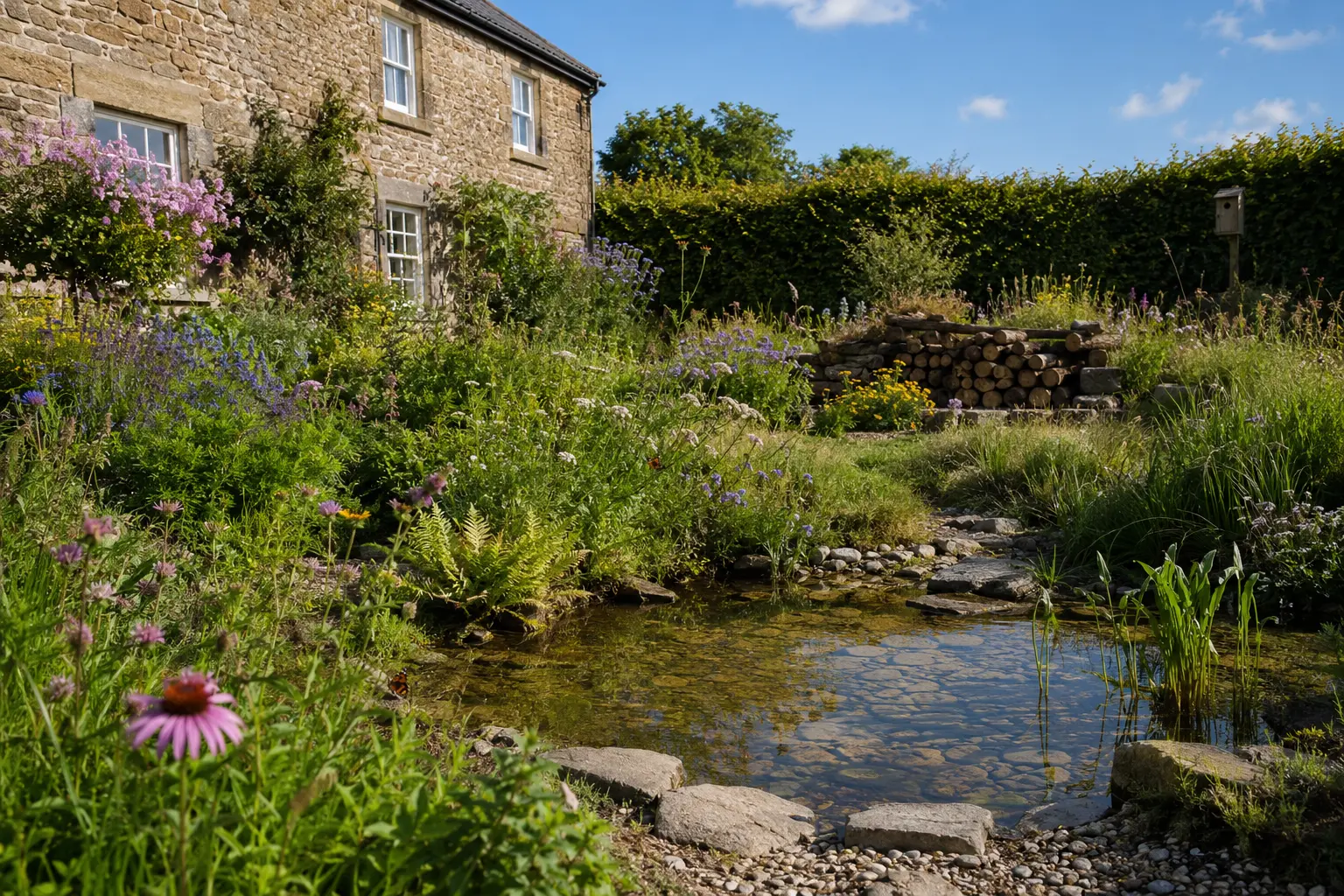
Even a small pond can help insects, birds and amphibians. Include shallow edges and a secure escape route so animals can climb out, and make it safe around children.
Small changes, living spaces
Food, fresh water, shelter and safe routes can turn even a modest garden into part of a wider habitat.
Start with habitat
Wildlife-friendly gardening is about creating variety: sunny and shaded places, flowers across the seasons, clean water, nesting opportunities and undisturbed corners.
Make changes gradually and watch what arrives. A small patch managed well can be more valuable than ambitious features that are difficult to maintain safely.
Six practical actions
Even a small pond can help insects, birds and amphibians. Include shallow edges and a secure escape route so animals can climb out, and make it safe around children.
Choose a mixture of nectar-rich flowers, shrubs and climbers. Native plants can be especially useful, but structure and a long flowering season matter too.
Retain mature shrubs where possible and place suitable bird, bat or insect boxes carefully. Match each box to its species and keep entrances clear.
Avoid routine chemical use. Healthy soil, plant diversity, hand removal and accepting a little leaf damage can support a more balanced garden.
Seed heads, leaf litter, log piles, hollow stems and dense evergreen growth provide food and protection when wildlife needs them most.
Where appropriate, small ground-level gaps between gardens help hedgehogs travel. Keep netting raised or taut and cover dangerous drains or holes.
Night-time garden
Artificial light can change how bats, moths and other nocturnal wildlife feed and move. Use lighting only where needed, point it downwards and choose timers or motion sensors rather than leaving it on all night.
Quiet, dark edges beside hedges and trees are especially valuable as wildlife corridors.
Begin this weekend
You do not need to redesign the whole garden. Begin with changes that are safe, affordable and easy to sustain.
Use a shallow dish with stones for footing, refresh it regularly and keep it clean.
Allow leaves, stems or longer grass to create a small patch of shelter.
Choose a suitable flowering plant that extends the garden’s nectar season.