From robins to finches
Robins, blackbirds, wrens, blue tits, great tits and finches are regular garden visitors. Mixed planting, clean water and natural seed heads make gardens more useful throughout the year.
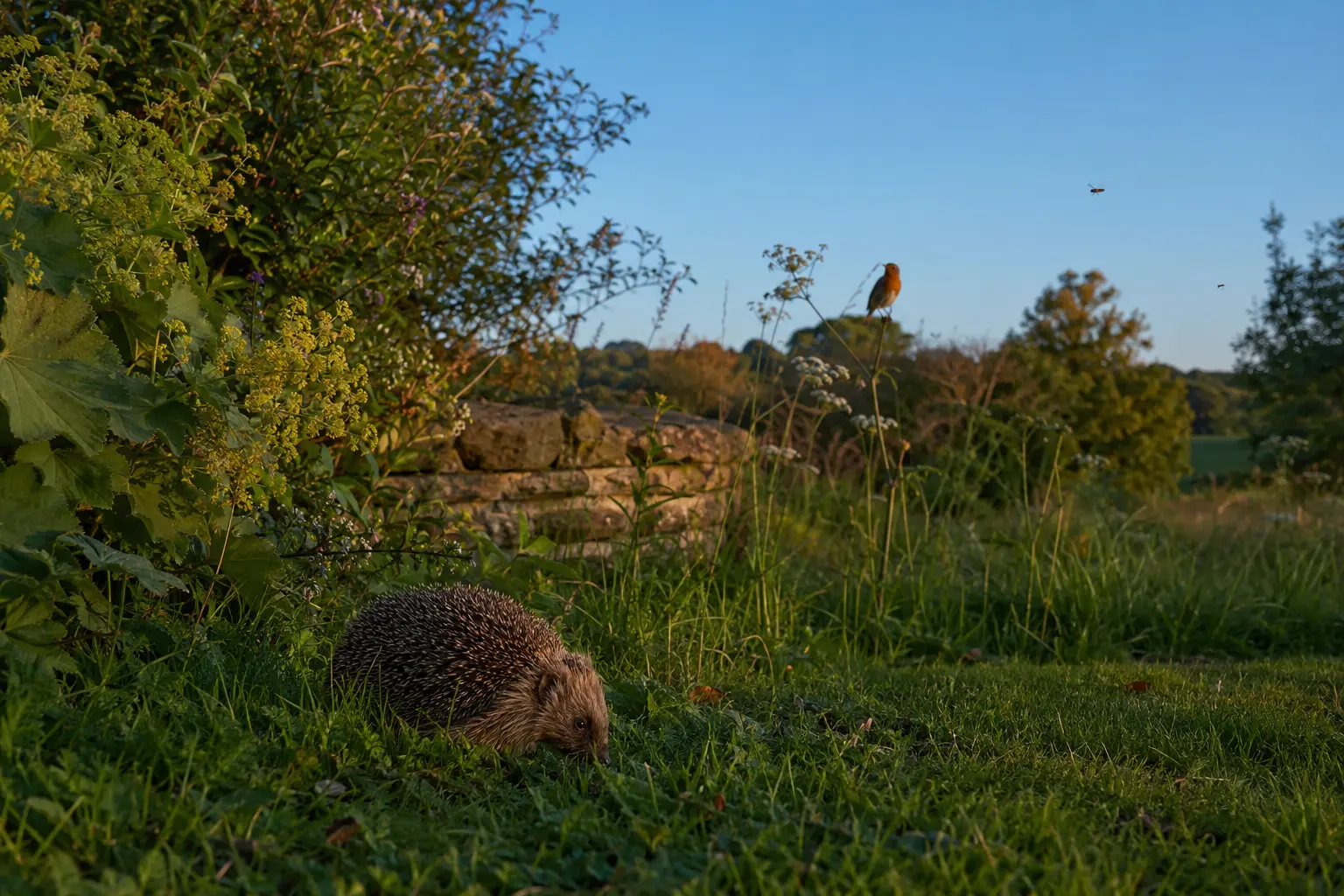
Gardens · hedgerows · farmland
Even an ordinary garden or evening walk can reveal a surprising community of birds, mammals and insects.
Look a little closer
Malton sits within a varied landscape of gardens, parkland, rivers, hedgerows, farmland and woodland. That mixture gives wildlife places to feed, shelter and move between habitats.
What you see changes with the weather and the season. Watch quietly, keep a respectful distance and avoid disturbing nests, roosts or resting animals.
Who to look for
These are broad introductions rather than identification guarantees; similar species can be difficult to separate at a glance.
Robins, blackbirds, wrens, blue tits, great tits and finches are regular garden visitors. Mixed planting, clean water and natural seed heads make gardens more useful throughout the year.
Bats may be seen feeding around trees, gardens and buildings on mild evenings. They and their roosts are legally protected, so seek specialist advice before work that could affect them.
Hedgehogs travel surprisingly far while foraging. Linked garden gaps, leaf piles, log shelters and ponds with an escape route can all help them move and feed safely.
Peacocks, small tortoiseshells and whites are among the most recognisable butterflies. Moths are often overlooked, yet they are important pollinators and food for birds and bats.
Rabbits, brown hares, foxes, roe deer and small mammals may be encountered around field margins and woodland edges. Dawn and dusk are often the best times to watch from a distance.
Honey bees, bumblebees, solitary bees and hoverflies visit flowers around Malton. Our dedicated local bee guides explain identification and what to do if a swarm appears.
Watch responsibly
Use binoculars or a camera rather than moving closer. Keep dogs under effective control, leave young animals where they are unless clearly at risk, and never reveal the location of a sensitive nest or roost online.
If an animal changes its behaviour because of you, calmly move farther away.
Stay on paths where asked and avoid trampling field margins, banks and wildflower areas.
Note the time, place and features you saw; a photograph can help with later identification.